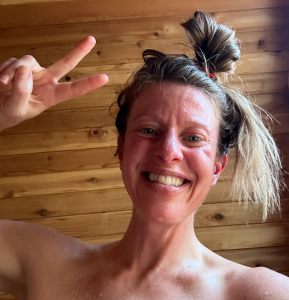
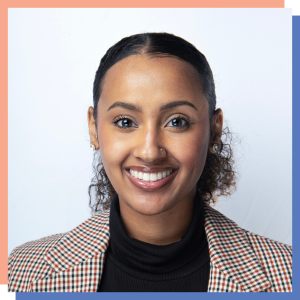
Our backgrounds differed but our early money stories touched on similar themes.
We had all inherited a money story and framework that required investment and evolution to grow our perspectives and skills that would allow us to exercise more agency with respect to owning our money flows, investment portfolios, and around building our financial foundations.
Executive coach and former Google leader Ina Winterle shared that she was raised in Germany with a framework that prioritized saving over investing or spending. Over time, she began questioning some of those inherited assumptions and became much more intentional about where and how she puts her money to work. Today, she sees investing as another way to exercise agency, making conscious choices about both financial return and what her capital helps create.
Marion Chebet, an investment principal, moves capital in meaningful ways into places nobody else will touch. She grew up in Kenya where she was taught that money was just for rich people. Those without money didn’t feel that they had a place spending or directing it. Today, she unpacks meaningful money insight alongside thoughtful financial allocation strategy spanning personal finance to instutional capital deployment.
Umadevi Gopaldass shared that growing up in poverty in Singapore instilled her with money habits that didn’t allow her to step into a mindset to build a healthy financial footing over four decades. Even alongside navigating high paying roles in oil rigs globally she shared that she’d never known how it felt to have money, so she kept pushing it away. Until she didn’t. Today, Uma loves contributing her investment insight and influence in the boardroom and in investor discussions.
As an engineer and former Wall Streeter, I fought my own attraction to money for decades. My relationship finally changed once I met myself fully and learned to accept my desire and attraction to and with money. I learned to evolve my relationship to be more rewarding in terms of where my money flowed and to ensure deep values alignment. Today, I write checks with enthusiasm and confidence.
Jen Uhenn, a money coach and real estate investor, grew up in a family that talked about money constantly. Conversations speaking to money allowing her to navigate to agency and alignment with her spend and investment decisions.
Money buys optionality and brings choice, the speaker group agreed.
Martina Felderman, a former molecular biologist turned executive coach, shared that to her, money buys you the right to spend as you want. Money allows you to live the life that you want. Assuming you have a good relationship to and with it.
We hadn’t improved our relationship to and with money by making more of it. We shared it being about the self-work of recognizing our individual blockers, biases, and gaps with respect to it. Recognizing and accepting our money stories and stepping into a more positive and ever evolving relationship with it. One that served us and our values.
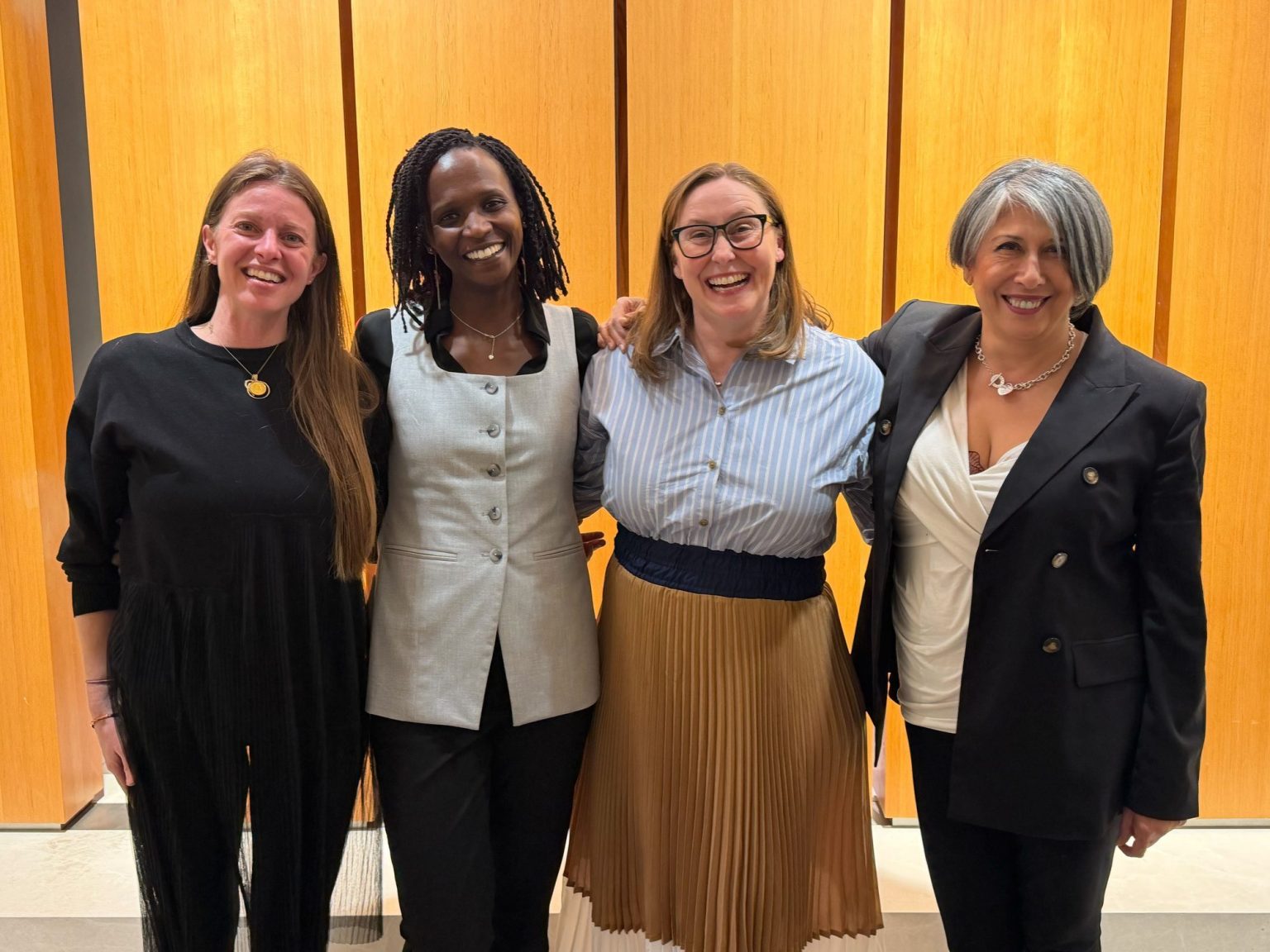
So how does one step into new skills and confidence and a more meaningful relationship to and with money?
Confidence comes through showing up and doing the work, we agreed.
Marion’s step one: if you don’t have a 401(k) or an IRA, open one and put a hundred dollars in it. That’s a great start.
Investor and venture founder Arezou Zarafshan pointed out that you don’t need to be an accredited investor to start learning. You can engage and even allocate capital early in your learning journey. What you’re buying isn’t the only return. It’s fluency. How a founder pitches. What a financial projection looks like. How to navigate investment evaluation.
Jenn shared how she started in private investing by allocating a modest three hundred dollars into a fintech business through a crowdfunding platform. She was fully prepared to lose it. The business got acquired instead.
What she measures isn’t whether it worked. It’s whether she learned something and got outside her comfort zone.
Not investing is a decision too.
If you don’t step into risk, you won’t have the opportunity to earn real returns. You won’t even stay even in terms of the value of your assets as inflation devalues your money over time if it isn’t invested.
Marion shared a thoughtful pre-investment framework with us. Before you put money into anything private, ask yourself the following questions:
What’s your time horizon? (Private investing means your capital is tied up for at least five or even ten or more years.)
What volatility can you actually live with? What if the position is fully wiped out?
Why are you doing this? Honestly.
What’s your background or what do you need to know to get involved?
Which asset class are you interested in?
She also explained the capital stack comparing it to a tower of champagne. Think of an equity versus a debt position. The top glass fills fast and gets paid first. The bottom glass takes the longest and carries the most risk, so it had better get paid a premium.
Marie Peters weighed in how her risk tolerance changed with her life stage. Before kids she sold her car and went to volunteer abroad. Now there’s a mortgage and college savings to think about and plan around.
Do you know your monthly expenses?
How about your net worth? (Everything you own minus everything you owe.)
What kind of interest rate are you carrying? Good debt buys a building or a business. Bad debt is the credit card you can’t pay off.
Pay yourself first and make the expenses fit around it, we agreed.
Invest with your values.
Ina shared that she had lost numerous family members to breast cancer and how mammography hadn’t changed meaningfully in decades. A founder with a better solution in this space was an instant yes for her.
The CEO of Osteoboost pitched our investment group on their wearable device that builds bone density for postmenopausal women with osteopenia. Thirty minutes a day, three days a week. She told us rooms of VCs (predominantly men) had called it a niche market.
In comparison, our room full of women was blown away. Feeling overlooked in our bodies and lived experiences we loved the vision, execution, and product.
From the founder side of the table Arezou shared turning down a $250,000 check because it had been offered under false pretenses. “Conscious capitalism is about consciousness, which is all about choice. Examine your choices. What you choose to do with your money, and what you choose not to.”
You’re already investing. You’re just not necessarily choosing where your money flows.
Jenn reminded us that your choice of who you bank with is its own allocation. Your deposits get lent out about nine times over. NINE TIMES OVER! Your money is already funding somebody’s projects. You just didn’t pick them.
Mighty Deposits scores banks on how they actually use deposits. And you’re not limited to one bank. Open a savings account at a community bank or a women-owned bank, put five hundred in, and they can lend it nine times!
“I never chose Chase,” Jenn said. “They chose me through acquisitions.” Her first savings account was at Gary Wheaton Bank. Which became First Chicago. Which became a chain of mergers. Which became Chase.
Your spending is an allocation choice too. Women drive roughly 85% of global consumer spend.
Your returns are also a choice. Jenn owns a condo inside her self-directed IRA. She inherited a tenant, 86 years old, working part-time as a construction flagger, paying $900 a month while the neighbors pay $1,500 to $1,700. She took him to $1,050 noting she wanted him to be able to afford his living situation.
“The most badass thing about being an investor is that you get to choose your returns, and you get to choose how you invest.” Jenn shared.
Sentiment we share at She’s Independent Investments. Investing in what we deem to be worthwhile from a values AND returns perspective.
Investors are choosing your future. If you don’t like where it’s going, use your money in ways to build a better future.
Becoming an Investor.
When Ina wrote her first check she asked us to capture the moment with a photograph.
She wanted to celebrate the milestone with her daughters and show them that their mom was an investor.
Are you interested in stepping into the investor seat? It only requires a curiosity and stepping into that first check.
With thanks to the women who shared their stories.
Ina Winterle — executive coach and former Google leader. Keys2Success Coaching · LinkedIn
Marion Chebet — investment principal. LinkedIn
Umadevi “Uma” Gopaldass — founder of Leading Lotus · LinkedIn
Jenn Uhen — founder of The Pledgettes · LinkedIn
Marie Peters — Fund Director, B:Side Capital · LinkedIn
Martina Felderman — executive coach. martinafelderman.com · LinkedIn
Arezou Zarafshan — founder of Call Emmy · LinkedIn
Katerina Yared — energy and science executive · LinkedIn
The Money Mindset series is created and produced by Natalie Levy, founder and managing partner of She’s Independent, who speaks and moderates across the series. More on Natalie’s speaking.
You can catch replays from our previous money mindset discussions on our YouTube channel.
She’s Independent makes investing work better, for more people.